The Story Around Grok, Telegram, and Public Statements
Analytical material based on open sources. This is not an official position of Telegram, xAI, or their representatives.
March 26, 2025: Grok Launch in Telegram Was Announced
On March 26, 2025, Elon Musk announced Grok launch in Telegram.
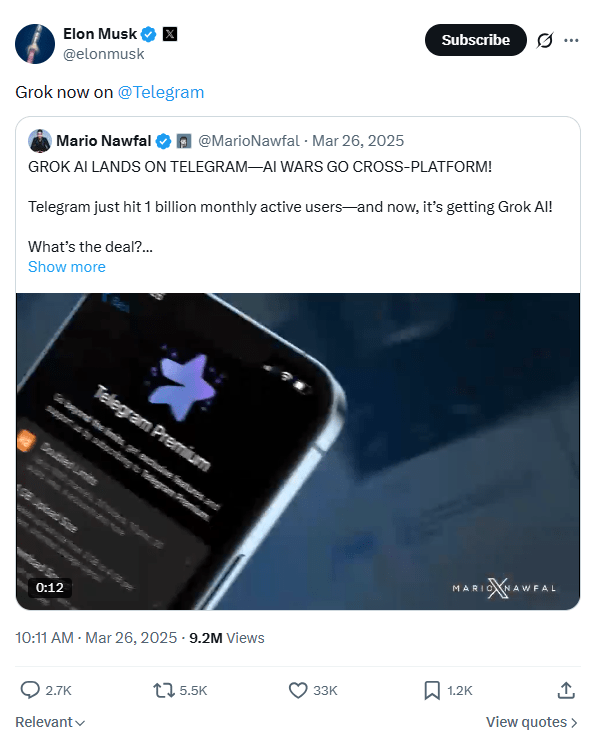
At that moment Telegram had reached 1 billion users. Expansion to this audience could strengthen Grok and boost Telegram simultaneously. By all signs, the plan was ambitious: the bot was expected to work not only in private chats but also in groups and channels, assist with moderation, summarize PDFs and long messages, and cover many practical use cases.
Two Months Later: Publicly Conflicting Statements
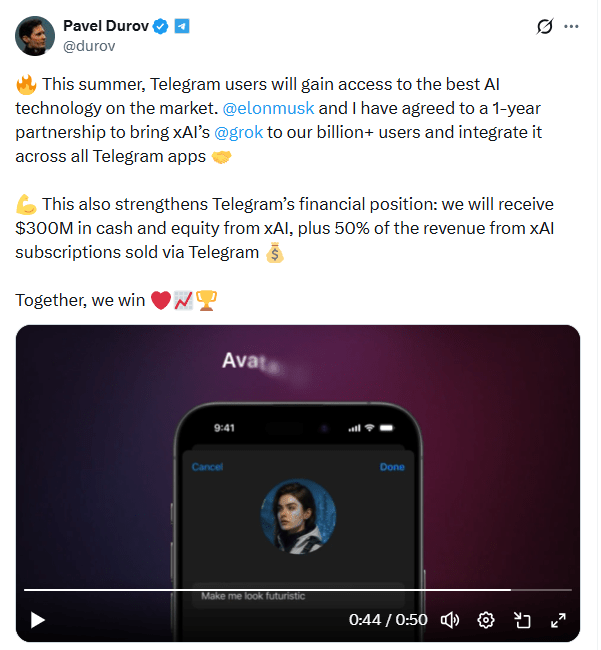
Two months later, Pavel Durov reported a proposed one-year agreement with xAI. According to his statement, Telegram would receive $300 million in cash and 50% of xAI subscription revenue generated via Telegram.
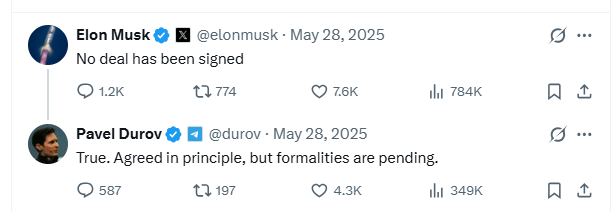
The same day Elon Musk publicly said this framing did not match reality. Additional clarifications followed from Telegram. Despite the disagreement, the bot launched, but access was limited to Telegram Premium users.
Beginning of Technical Problems
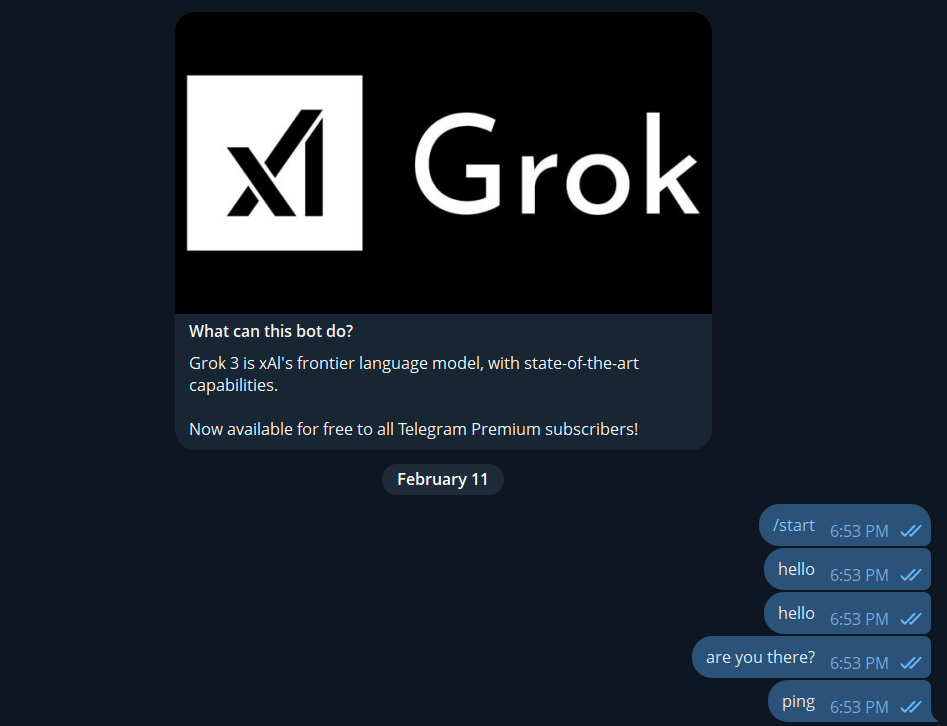
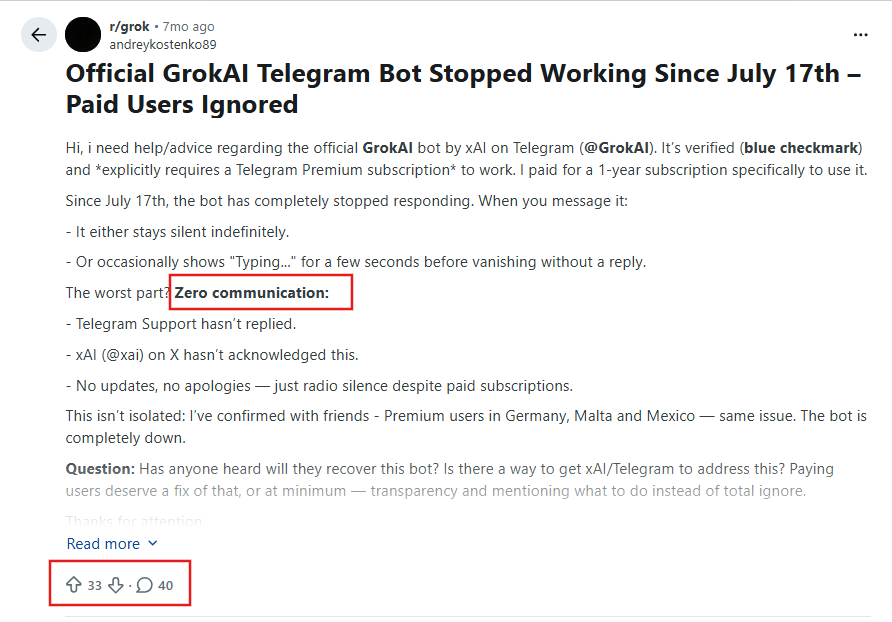
In early September 2025, users started reporting service disruptions. Later, reports appeared saying the service became unavailable.
The @GrokAI account is still visible in Telegram, but user
reports said the bot stopped responding.
What Could Be the Cause?
No detailed official explanation was published. The sides did not provide a public post-mortem.
Discussed hypotheses include financial disagreements, reputational fallout from public statements, and possible strategic focus of xAI on its own ecosystem.
Why the Privacy-Only Explanation May Be Incomplete
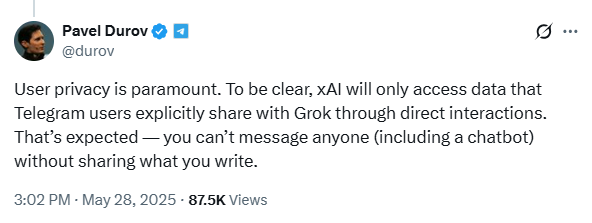
Public discussions included a theory that Telegram privacy and anonymity requirements were the key factor.
However, Grok had already been working in Telegram for some time. That is why some observers believe privacy concerns alone may not fully explain the outcome.
Context: Building an Internal Ecosystem
Elon Musk publicly discussed XChat development plans. Integrating Grok into a proprietary platform could strengthen its position and create an extra competitive advantage.
In this context, focus on internal ecosystem growth rather than a long-term integration with an external messenger looks plausible.
Parallel Telegram Initiatives
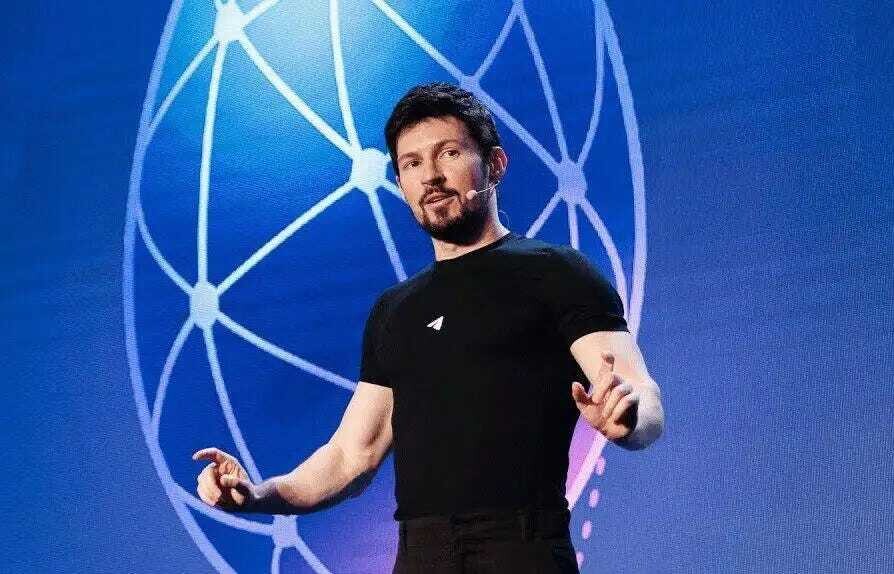
During the same period, Pavel Durov announced Cocoon, an initiative for AI infrastructure on TON.
The concept assumes a distributed model: participants provide compute resources and receive TON rewards, while developers deploy models and pay for infrastructure usage.
What If You Still Need Grok in Telegram?
When it became clear the official option was not reliable, I tested alternatives and did not find a truly stable working bot. So I built my own bot, first for personal use and later as a full project.
You can try it here: t.me/grok_ai_telegram_bot
@grok_ai_telegram_bot
Conclusions
The Grok-in-Telegram story began with a loud announcement, but ended without detailed public explanations.
Whether the reasons were financial disagreements, strategy, or a mix of factors, definitive public information was not provided.
How do you assess this situation?